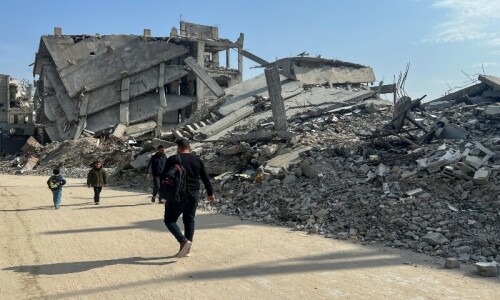
The United States has expressed reservations about Egypt’s proposed plan for Gaza, stating that it does not align with President Trump’s expectations. The Egyptian initiative, endorsed by Arab leaders, aims to rebuild Gaza with a $53 billion investment, focusing on sustainable urban development and infrastructure improvements while ensuring Palestinians remain on their land. This approach contrasts with President Trump’s controversial proposal to depopulate Gaza and redevelop it as a beach destination, which has faced widespread criticism for potential violations of international law.
The U.S. administration has dismissed Egypt’s plan as impractical, citing Gaza’s current uninhabitable conditions post-conflict. Instead, the U.S. favors a bold post-war vision for Gaza, though specifics have not been detailed.
In response to the differing visions for Gaza’s future, Egypt has proposed establishing a Governance Assistance Mission to oversee humanitarian aid and reconstruction efforts, aiming to sideline Hamas and replace its governance with interim bodies managed by Arab, Muslim, and Western states. An International Stabilization Force led by Arab nations is also suggested to provide security in the region.
The divergence between the U.S. and Egypt-led plans highlights the complexities in addressing Gaza’s reconstruction and governance post-conflict, reflecting broader geopolitical dynamics and differing priorities among international stakeholders.