ISLAMABAD:
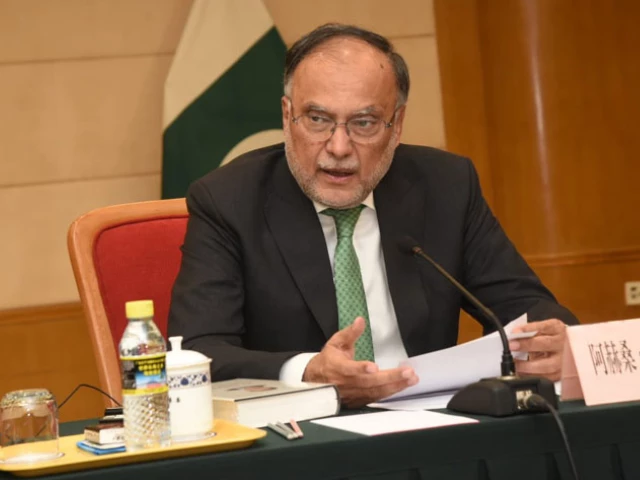
As the maiden meeting of the National Finance Commission is set to put a spotlight on performance of provinces, Khyber-Pakhtunkhwa in particular, Planning Minister Ahsan Iqbal has proposed multiple options to redistribute resources that would benefit the Centre and smaller federating units.
Despite giving more weight to the variables that strengthen the fiscal position of the smaller provinces, the share of K-P would increase from 1% to 3% in the range of 15.7% to 17.1%, showed the details of the proposals being submitted to Prime Minister Shehbaz Sharif.
The K-P government is claiming that its share should go up by 6% to nearly 20% after the merger of erstwhile tribal districts.
According to these options, the federal government should upfront cut 4.7% to 6% of the undistributed divisible pool on account of various expenses and then distribute the 57.5% of the remaining taxes among the provinces.
To increase flow of the resources towards smaller provinces, the minister has proposed reducing the share of the population from 82% up to 60% and increasing share of revenue collection to 20% to force them to generate their own resources.
The federal government has convened the maiden meeting of the NFC today (Thursday), which will be chaired by the Finance Minister Muhammad Aurangzeb. This meeting will set the stage for devising a new formula to distribute the fiscal resources between the Centre and the federating units.
But the spotlight will be on the Chief Minister Khyber Pakhtunkhwa Sohail Afridi who is also the provincial finance minister. The federal government wants to hold the KP government accountable for its failure to effectively utilize the fiscal resources.
In addition to its 14.62% share in the NFC, the KP government also receives 1% of the divisible pool as compensation of the losses due to war on terror. According to some estimates, the total additional resources transferred to the province were Rs700 billion since 2010.
However, despite the additional support, promised improvements in public safety, policing, and post-conflict recovery remain largely unrealized, according to the federal authorities. There has been a call for a comprehensive public audit to show precisely how these funds were utilized, as the provincial government claims that it has not been adequately compensated against the price that it is paying as the front line state.
According to the federal authorities, the KP government also benefited from straight transfers, oil & gas royalties, hydel profit allocations and merged-area rehabilitation allocations.
Poor contribution of provinces
The federal government sources said that during the background discussions, the provinces showed some willingness to share the federal expenses but they were not ready to take a direct hit on their revenue shares.
“While the NFC Award envisioned a shared responsibility toward revenue generation, provincial revenues have also not expanded in line with the NFC Award’s objectives”, according to the Planning Ministry report .
There is a massive and guaranteed inflow of financial resources from the federal pool towards provincial governments, but they have exhibited a low effort in mobilizing their own revenues.
The provincial tax and non-tax revenues in terms of the size of the economy remained at only 1.1%, which is negligible compared to their potential. This has created a culture of dependency, leaving provincial finances vulnerable to federal revenue shocks and highlighting the need to modernize their tax generation mechanism.