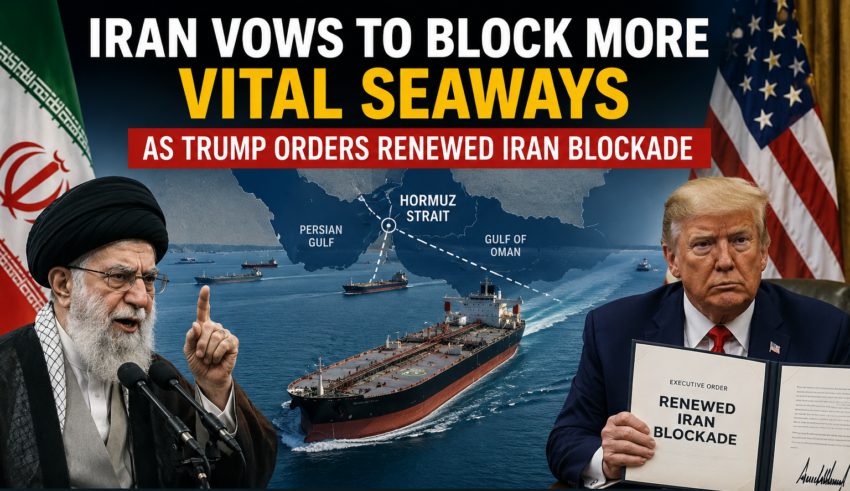
Tehran/Washington, July 13: Regional tensions escalated sharply after Iran vowed to disrupt additional strategic maritime routes in response to renewed pressure from the United States, following former President Donald Trump’s directive to intensify efforts aimed at restricting Iran’s trade and energy exports.
Iranian officials warned that any attempt to tighten economic or military pressure would be met with measures affecting key international shipping lanes, arguing that the country would defend its national interests against what it described as external aggression. While no immediate operational steps were announced, the statements heightened concerns over the security of global maritime trade.
The renewed U.S. strategy is expected to focus on expanding sanctions enforcement and increasing naval coordination with regional allies to curb Iranian oil exports and limit financial networks linked to Tehran. American officials maintain that the measures are intended to deter Iran’s regional activities and strengthen stability in the Middle East.
Shipping companies and energy markets reacted cautiously to the developments, with analysts warning that any disruption to major sea routes could affect global oil supplies, increase freight costs, and fuel volatility in international energy prices.
Regional governments have urged restraint, emphasizing the importance of keeping critical maritime corridors open for commercial navigation. Diplomatic efforts are reportedly continuing behind the scenes to prevent further escalation and reduce the risk of confrontation in one of the world’s busiest shipping regions.
Security experts caution that prolonged tensions between Washington and Tehran could have far-reaching consequences beyond the Gulf, impacting global trade, energy security, and regional stability. As both sides exchange increasingly firm rhetoric, the international community continues to call for dialogue and diplomatic engagement to avert a broader crisis.