
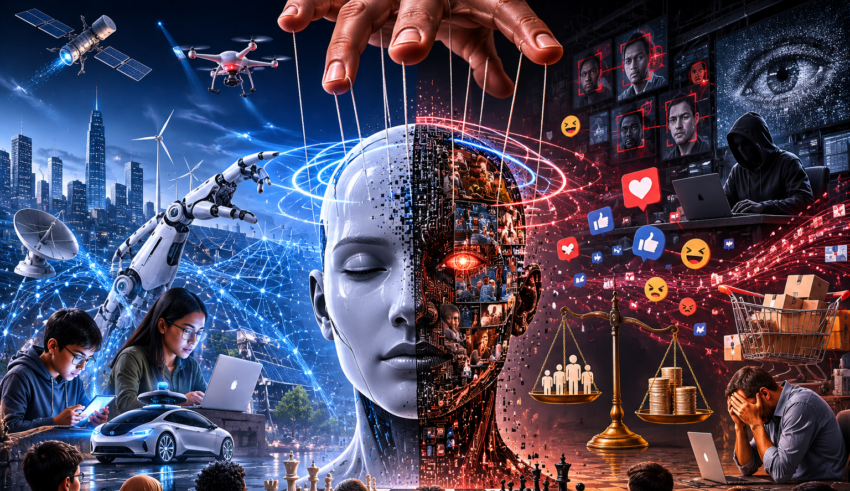
San Francisco, July 13: The long-held belief that technology is inherently objective is facing increasing scrutiny as researchers, policymakers, and industry leaders warn that artificial intelligence and digital platforms often reflect the biases, assumptions, and priorities of the people who design them.
Experts argue that while algorithms process vast amounts of data with remarkable speed, their outputs are shaped by the quality of the information they are trained on. If historical data contains social, economic, or cultural biases, AI systems can unintentionally reinforce those patterns in areas such as hiring, lending, healthcare, and law enforcement.
The debate has intensified as governments worldwide move to regulate artificial intelligence and demand greater transparency from technology companies. Policymakers are calling for independent audits, ethical guidelines, and stronger accountability measures to ensure automated systems do not unfairly disadvantage individuals or communities.
Technology firms acknowledge the challenges and have invested heavily in improving AI fairness, explainability, and safety. Many companies now employ ethics teams and conduct regular testing to identify potential biases before products are deployed on a large scale.
Academics caution that the concept of complete technological neutrality is unrealistic. They argue that every stage of technology development—from data collection and model design to deployment and oversight—involves human decisions that inevitably influence outcomes.
As artificial intelligence becomes increasingly embedded in everyday life, analysts believe public trust will depend not only on technological innovation but also on transparency, accountability, and responsible governance. They say recognizing that technology is shaped by human choices is an essential step toward building systems that are more reliable, equitable, and worthy of public confidence.