ISLAMABAD:
A legal tool once used extensively to unseat lawmakers has now entered far more sensitive territory, as the Islamabad High Court (IHC) prepares to hear a quo warranto petition challenging the eligibility of a sitting high court judge, a development that has reignited debate over judicial immunity and constitutional safeguards.
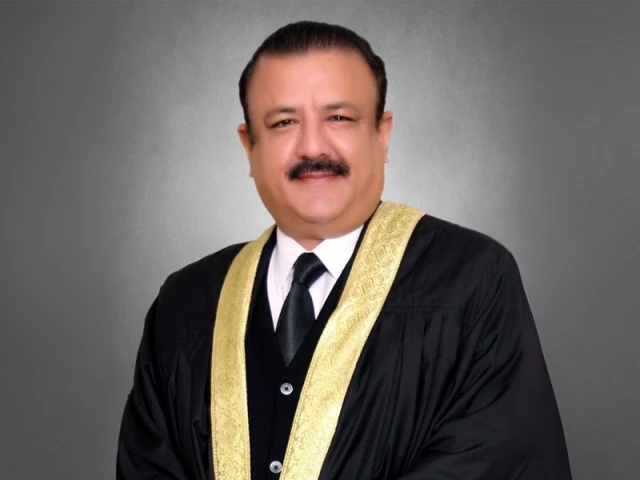
A division bench of the IHC, headed by Chief Justice Muhammad Sarfraz Dogar, is scheduled to take up today (Monday) a petition seeking the disqualification of Justice Tariq Jahangiri on the allegation that he holds an invalid degree.
The case marks a rare moment in Pakistan’s legal history where the jurisdiction of quo warranto, traditionally exercised against elected representatives and executive office-holders, is being tested against a member of the superior judiciary.
The proceedings come against the backdrop of a long and contested history of judicial activism following the restoration of judges in March 2009, when quo warranto was repeatedly invoked to remove lawmakers, prime ministers, heads of accountability institutions and civil servants.
Senior lawyers argue that those interventions weakened parliament, a pattern now being re-examined as the same jurisdiction turns inward.
According to Article 225 of the Constitution, no election dispute can be called into question except through an election petition. However, the Supreme Court disqualified many lawmakers by exercising quo warranto jurisdiction under Article 184(3).
Since the Lawyers’ Movement of 2007, different chief justices of Pakistan (CJPs) have adopted varying approaches to judicial activism.
Senior lawyers agree that the exercise of quo warranto jurisdiction against lawmakers in the past weakened parliament, with Pakistan Muslim League-Nawaz (PML-N) and Pakistan Peoples Party (PPP) emerging as the main victims. However, the situation has now changed following the passage of the 27th Constitutional Amendment.
According to legal observers, the executive now enjoys greater dominance over the judiciary. They argue that even judges who are not in the government’s good books are facing pressure from within their own ranks.