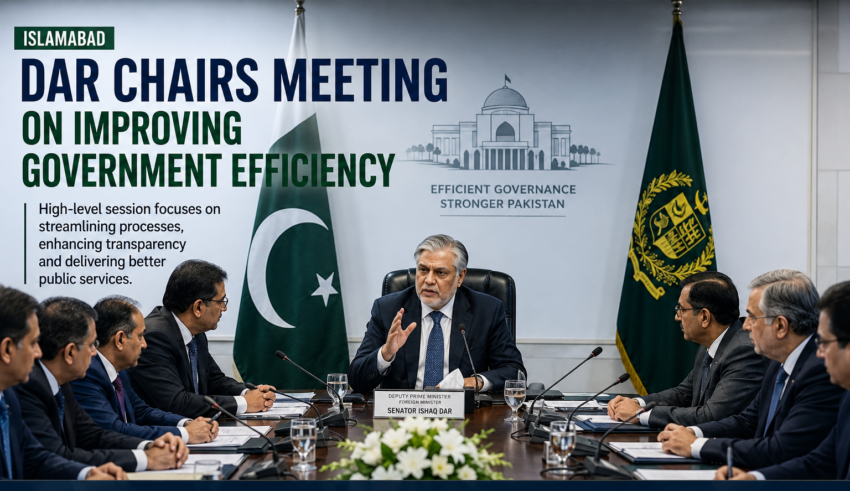
Islamabad, July 10: Deputy Prime Minister and Foreign Minister Ishaq Dar on Friday chaired a high-level meeting aimed at enhancing the efficiency and performance of government institutions, with senior officials discussing practical measures to ensure faster, more transparent, and citizen-focused governance.
The meeting brought together key representatives from various ministries and departments to review existing administrative practices and identify areas requiring immediate reform. Participants exchanged views on reducing unnecessary delays, simplifying official procedures, and strengthening coordination among government bodies.
Opening the session, Dar emphasized that an efficient public sector is essential for economic growth, investor confidence, and improved public service delivery. He noted that modern governance demands quick decision-making, accountability, and the effective use of digital technologies to meet the expectations of citizens.
Officials presented proposals to streamline internal workflows, expand e-governance initiatives, and introduce performance-based monitoring systems. The meeting also highlighted the importance of minimizing bureaucratic hurdles, improving transparency, and ensuring that public resources are utilized responsibly.
Participants agreed that technology-driven solutions and better interdepartmental collaboration could significantly enhance service delivery while reducing costs and processing times. The discussion also focused on developing measurable targets to evaluate the performance of government institutions and ensure continuous improvement.
Concluding the meeting, Dar directed the relevant authorities to prepare a comprehensive implementation plan and submit periodic progress reports. He stressed that reforms should produce visible improvements in the daily lives of citizens and reaffirmed the government’s commitment to building a responsive, efficient, and accountable public administration.
The meeting reflects the government’s broader efforts to modernize state institutions and strengthen governance, with officials expressing confidence that sustained reforms will contribute to long-term economic stability and improved public trust.