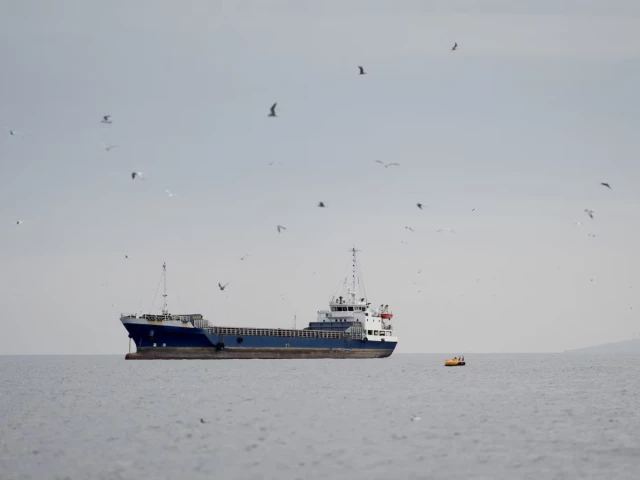
Dubai/Washington (April 15, 2026) — The United States announced on Wednesday that its military has completely halted all maritime trade entering and leaving Iran by sea. This aggressive blockade was implemented even as President Donald Trump expressed optimism that negotiations with Tehran to end the ongoing conflict could resume as early as this week.
Admiral Brad Cooper, Commander of U.S. Central Command (CENTCOM), stated that American forces have fully enforced the blockade, cutting off economic trade that accounts for an estimated 90% of Iran’s economy. In a post on X, he declared: “In less than 36 hours since the blockade was implemented, U.S. forces have completely halted economic trade going into and out of Iran by sea.”
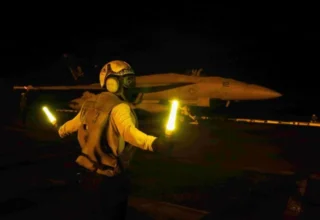
The blockade began on Monday, April 13, targeting all vessels entering or exiting Iranian ports in the Persian Gulf and Gulf of Oman. It is being enforced by a significant U.S. naval presence, including guided-missile destroyers, the USS Tripoli, F-35 fighter jets, and Marine teams. CENTCOM has emphasized that the measure applies only to traffic connected to Iranian ports and will not interfere with neutral ships transiting the Strait of Hormuz to or from non-Iranian destinations.
Background and Reasons:
The move follows the collapse of high-level peace talks held over the weekend in Islamabad, Pakistan. Negotiators from the U.S. and Iran failed to reach an agreement on key issues, including Iran’s nuclear program, sanctions relief, uranium enrichment limits, and control over the Strait of Hormuz.
President Trump has described the blockade as a necessary pressure tactic to cut off Iran’s oil revenue and force concessions. He noted that Iran itself initiated contact afterward, signaling a desire for further dialogue. Sources indicate that U.S. and Iranian teams may return to Islamabad for a second round of talks in the coming days, with the current two-week ceasefire (set to expire around April 21) still in effect for now.
Iran has strongly condemned the blockade as “illegal piracy” and a violation of the ceasefire. Iranian officials have warned of potential retaliation, including threats to target U.S. naval vessels or disrupt shipping in the broader region. Tehran claims the action undermines diplomatic efforts and could endanger global maritime security.
Economic and Global Implications:
Impact on Iran: Iran’s economy is heavily reliant on seaborne trade, particularly oil exports (around 1.8–2 million barrels per day in recent months). The blockade is expected to severely restrict these exports, drying up a critical source of foreign currency and exacerbating existing economic pressures from sanctions.
Global Oil Markets: While oil prices have risen above $100 per barrel in recent days amid the tensions, markets remain relatively stable for now due to the ongoing hope for renewed talks and assurances that the Strait of Hormuz itself remains open for most international shipping.
Hawala and Alternative Networks: Iran has long used informal financial systems like hawala, front companies, and cryptocurrencies to bypass sanctions. However, with physical maritime trade now largely shut down, these parallel channels are also likely to face increased limitations and scrutiny, further isolating Iran economically.
Nuances and Edge Cases:
Enforcement details remain somewhat fluid. Some shipping data has shown limited vessel movements in the Strait of Hormuz, raising questions about the blockade’s immediate effectiveness or exceptions being made. U.S. officials insist no unauthorized ships linked to Iranian ports have successfully passed.
The blockade is being applied impartially to vessels of all nations, which could create diplomatic friction with countries like China (a major buyer of Iranian oil) or others with economic ties to Tehran.
Regional allies (including Gulf states) are closely monitoring the situation. Some have privately expressed concerns about potential Iranian retaliation, such as attacks on their own ports or disruptions in the Red Sea.
Humanitarian considerations: While the focus is on economic pressure, prolonged disruption could affect food, medicine, and essential imports into Iran, prompting calls from international observers for careful calibration.
Related Considerations and Potential Outcomes:
This development represents a significant escalation in the U.S.-Iran conflict, shifting from direct military confrontation toward economic strangulation while keeping diplomatic channels open. It tests the balance between maximum pressure and negotiation — a hallmark of Trump-era policy.
Possible scenarios include:
Quick resumption of talks leading to a breakthrough (optimistic view expressed by Trump).
Iranian attempts to challenge the blockade, risking direct naval clashes.
Broader involvement of other powers, with Russia and China potentially criticizing the U.S. action at the United Nations.
Long-term effects on global energy security, shipping insurance rates, and the future of the nuclear deal framework.
The situation remains highly fluid. As of now, the U.S. maintains it has achieved maritime superiority in the area, while both sides appear to be leaving the door open for diplomacy amid the economic squeeze.
This is a developing story with major implications for the Middle East, global energy markets, and international law regarding blockades during conflicts.